
Recovery begins before the injection
A regenerative treatment is more than just PRP, BMAC, or another autologous product. The condition of the tissue, your biological baseline, and the subsequent support also determine how recovery progresses.
Prepare
the biological soil
Personalize
product and dosage
Support
recovery and rehabilitation
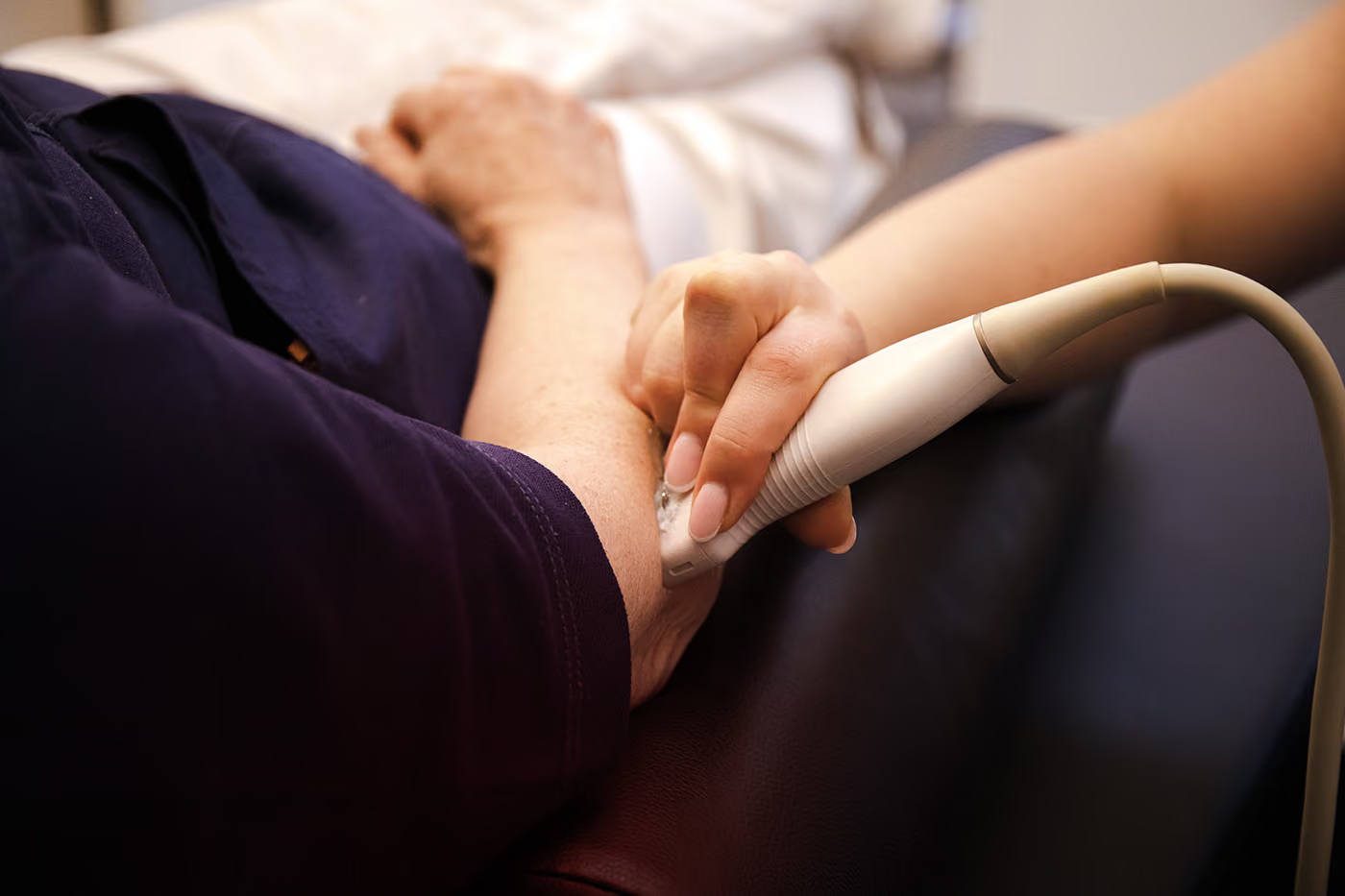
We prepare the soil
What does your recovery need?
Through the Clinical Profile, we determine which factors truly require your attention.
Nutrition and relevant deficiencies
Sleep and stress regulation
Movement and resilience
Photobiomodulation
Metabolic optimization
GLP-1 treatment if indicated
Through the Clinical Profile, we determine which factors truly require attention in your case.
Medical background
Metabolic dysregulation can coincide with systemic low-grade inflammation, oxidative stress, vascular changes, and an impaired cellular response. Insulin resistance, hyperglycemia, dyslipidemia, excess fat mass, sleep deprivation, and nutritional deficiencies can therefore also influence the local recovery environment.
The literature describes this metabolically driven inflammatory process as meta-inflammation. The clinical significance varies per patient and condition. Therefore, we do not use these factors as a fixed package, but as part of an individual medical assessment.
Not every PRP treatment is the same
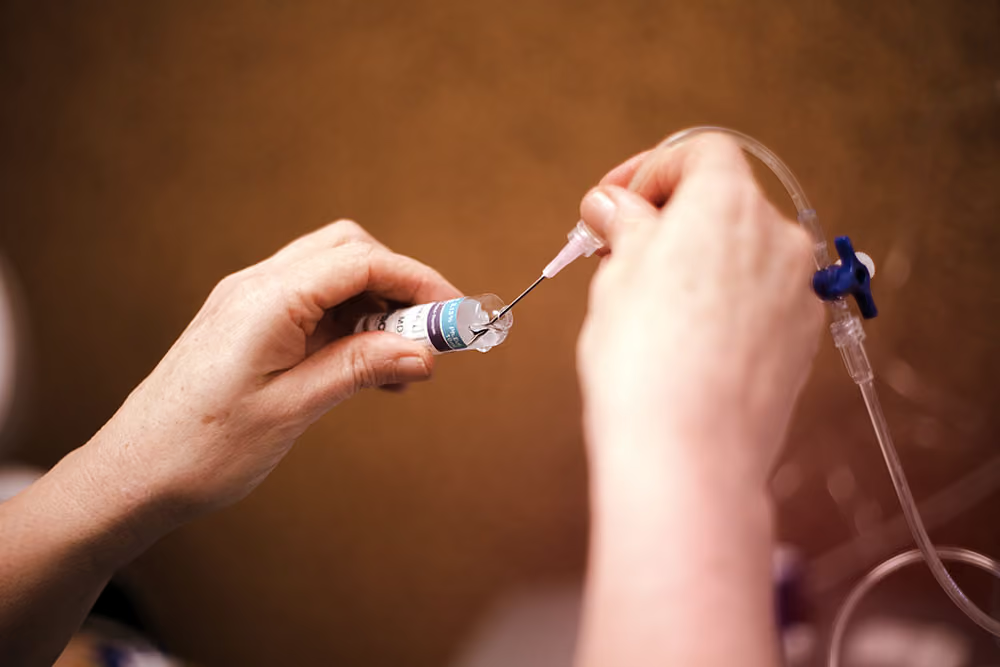
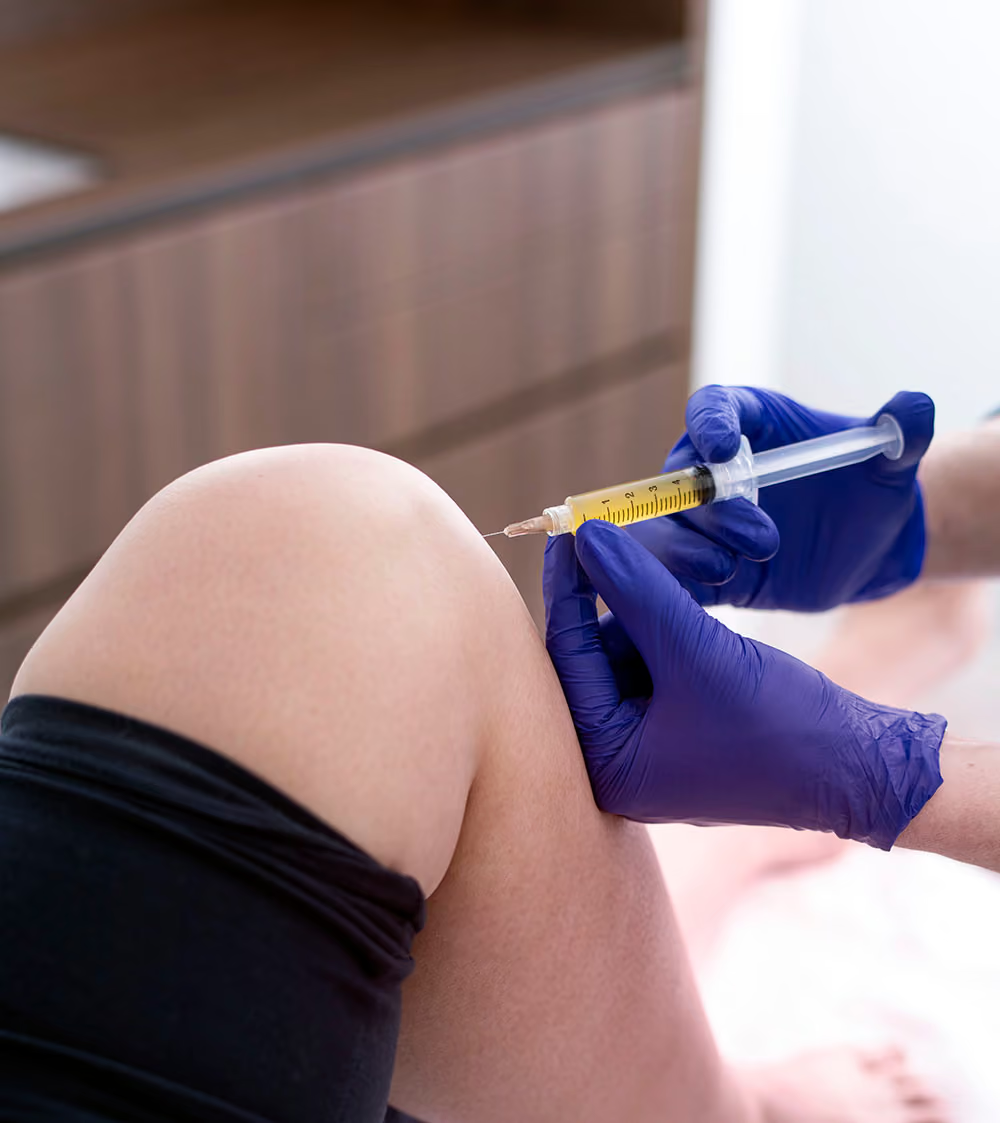
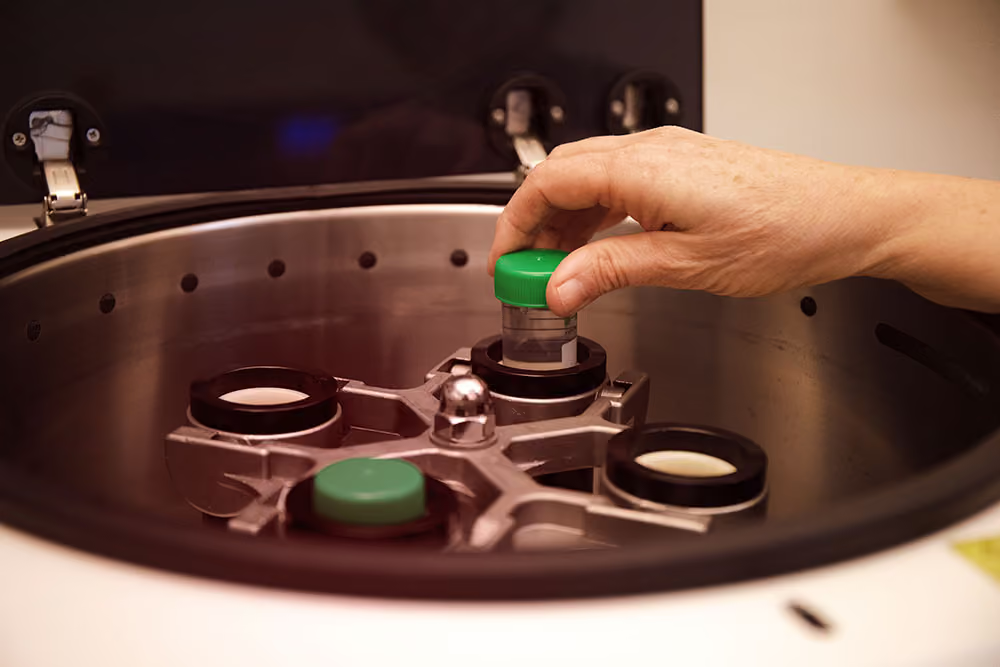
The total platelet dose counts
We look not only at the concentration per milliliter, but at the total amount of platelets delivered to the target area.
For us, high dose means a purposefully prepared and sufficiently dosed product — not simply as much as possible.
Medical background
Research into the clinical dose-response of PRP is currently most advanced for knee osteoarthritis. These data cannot be directly translated to every other joint or tissue. However, they do support the broader principle that a biological product must be adequately characterized and dosed for its intended purpose.
In addition to the total platelet dose, the injection volume, concentration factor, leukocyte profile, any red blood cells present, and plasma composition can be significant. Age, health, medication, and lifestyle can also influence the starting product.
An environment where recovery components work together
Platelets
concentrated biological signals
Plasma proteins
including fibrinogen and A2M
Healing matrix
temporary biological platform
More than just platelets
The potential role of BMAC
Medical insights
Everts, Podesta, and co-authors describe a protein-rich, platelet-rich plasma matrix in which a highly concentrated platelet fraction is combined with concentrated plasma proteins, including fibrinogen, albumin, and alpha-2-macroglobulin.
Upon activation, fibrinogen forms a three-dimensional network capable of locally retaining cellular and molecular components. During natural fibrinolysis, these can be gradually released. The potential addition of BMAC is a separate clinical treatment choice; clinical evidence for various combinations and indications is still evolving.
From diagnosis to supported recovery
1
Diagnosis and selection
Which structure is causing the symptoms, and is a regenerative treatment medically appropriate?
2
Clinical Profile
Which biological and functional factors influence your recovery and resilience?
3
Preparation
We address relevant barriers to recovery and prepare the tissue in a targeted manner.
4
Personalized intervention
We determine the product, composition, and dosage, and perform the treatment precisely under image guidance.
5
Stabilization and rehabilitation
Load, movement, local support, and follow-up are aligned with the biological recovery phase.
Would you like to know which approach is right for you?
A regenerative medical consultation begins with an accurate diagnosis and an honest discussion about options, alternatives, and expectations.